
Introduction
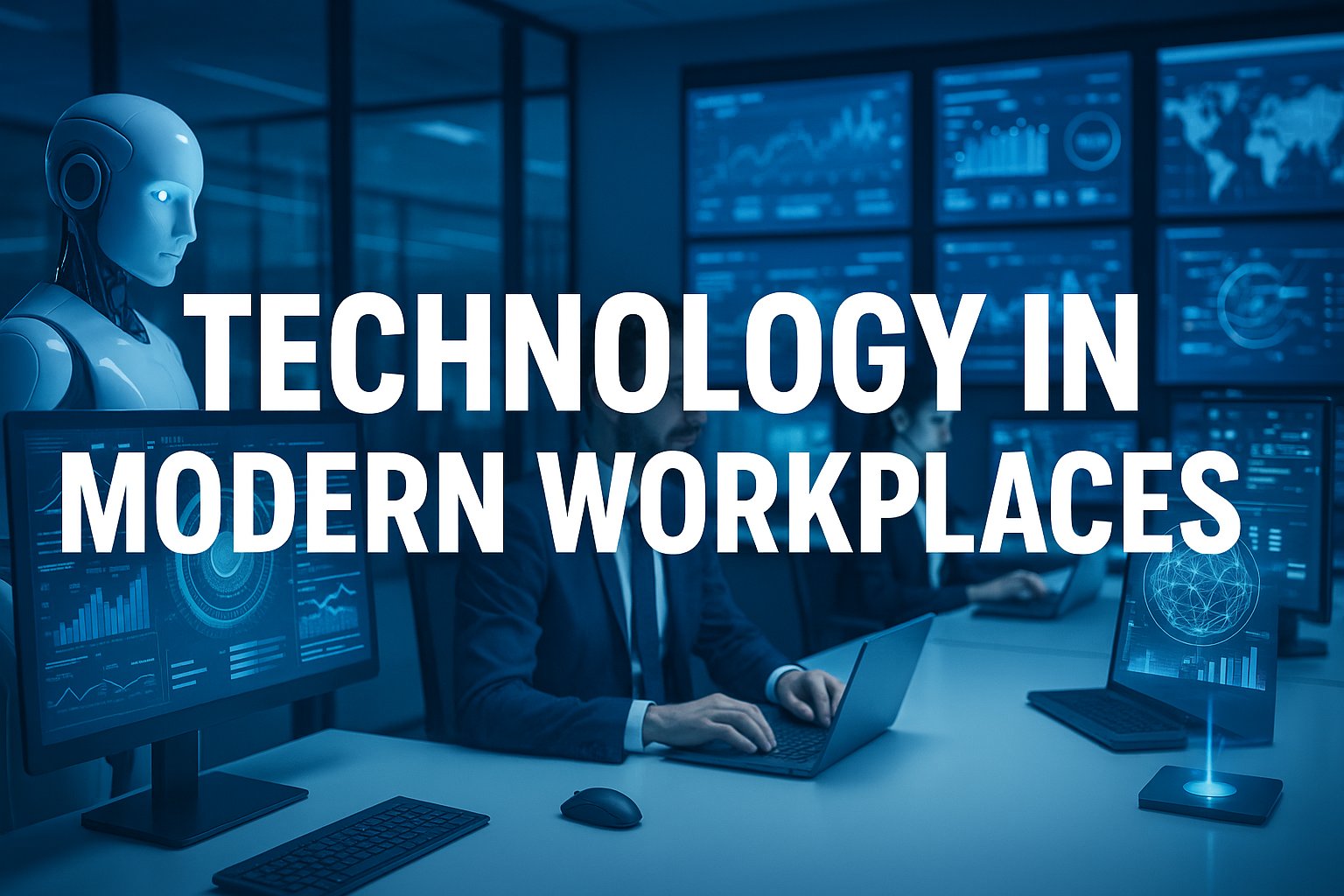
Modern workplaces are evolving at a pace we’ve never seen before. The rise of new technologies, automation tools, AI systems, and digital communication platforms has changed the way companies operate and the way employees work. A few decades ago, offices depended heavily on paperwork, physical presence, and face-to-face communication. Today, the workplace has shifted toward virtual collaboration, cloud storage, automation, flexibility, and efficiency driven by technology.
This transformation is not temporary — it represents a long-term shift in how organizations will function in the future. Employees now use technology not only for productivity but also for communication, decision-making, and creative work. Companies that adopt modern tools grow faster, work smarter, and stay more competitive.
This blog explores in detail how technology is transforming modern workplaces, how it influences employee performance, what benefits and challenges it brings, and what the future of work will look like in a technology-first environment.
Remote Work and Virtual Offices Have Become the New Normal
Technology has made remote work possible for millions of people. Cloud platforms, video conferencing tools, project management systems, and collaboration apps now allow employees to work from anywhere. Virtual offices have replaced the need for physical office spaces in many industries.
Companies use digital workspaces where teams can share documents, attend meetings, assign tasks, track progress, and communicate in real time. Remote work has also helped organizations access global talent, offering opportunities to hire skilled workers from different countries without relocation.
Employees benefit from flexible schedules, reduced travel time, and a better work-life balance. The workplace is no longer a physical building; it has become an ecosystem supported by digital tools.
Artificial Intelligence Is Automating Repeated Tasks
AI is one of the biggest forces shaping modern workplaces. Instead of spending hours on repetitive tasks like scheduling, data entry, reporting, and customer support, companies now use AI tools that automate these processes efficiently.
AI-powered chatbots handle customer queries. Machine learning algorithms analyze large amounts of data to help managers make better decisions. Smart scheduling tools organize calendars, send reminders, and optimize workflows.
By eliminating manual tasks, AI allows employees to focus on creativity, strategy, problem-solving, and innovation. Automation also reduces errors, increases accuracy, and speeds up operations.
In many industries, AI is becoming a digital assistant that supports human workers rather than replacing them.
Cloud Computing Has Revolutionized Data Storage and Collaboration
Before cloud technology, companies relied on physical servers and storage devices to manage their data. Today, cloud computing allows organizations to store information online, making it secure, accessible, and easy to manage.
Employees can access work files from multiple devices and locations. Collaboration becomes simpler because documents can be edited, shared, and updated in real time. Teams can collaborate across time zones and work on the same project without being in the same room.
Cloud technology also improves data security, backup systems, and disaster recovery. Even small businesses can now access advanced tools that were once available only to large corporations.
The cloud has become the backbone of modern workplaces — supporting everything from communication to software management.
Communication Tools Have Transformed Workplace Interaction
Communication is the heart of every workplace, and technology has modernized how people communicate. Instead of relying only on emails or in-person meetings, employees now use a variety of digital tools.
Video conferencing platforms allow virtual face-to-face communication. Instant messaging apps enable quick conversations. Collaboration software supports team discussions, document sharing, and project tracking.
These tools make communication faster and more efficient. They also help teams stay connected, especially those working remotely. Managers can supervise tasks, share updates, and encourage teamwork without being physically present.
Digital communication has reduced delays, increased transparency, and improved overall productivity in workplaces.
Smart Devices and IoT Are Making Offices More Efficient
The Internet of Things (IoT) refers to smart devices that can communicate with each other and automate tasks. Modern workplaces use IoT devices such as smart lights, sensors, smart security systems, and automated climate control systems.
These devices help companies save energy, maintain security, and improve employee comfort. For example, smart desks can adjust height automatically, smart door locks can detect authorized employees, and sensors can monitor room occupancy to reduce electricity usage.
IoT is creating more connected workplaces where buildings respond intelligently to employee needs.
Technology Is Enhancing Employee Training and Skill Development
Employee skill development is crucial for business growth. With technology, training has become more engaging and flexible. Companies now use digital learning platforms, video-based courses, interactive simulations, and AI-driven learning paths.
Traditional training sessions are being replaced by online programs employees can complete at their own pace. Virtual reality (VR) and augmented reality (AR) provide immersive learning experiences. AI systems track learning progress and recommend additional training materials.
Technology-enabled training ensures that employees stay updated, competitive, and ready for future work demands.
Data Analytics Helps Companies Make Smarter Decisions
Businesses generate enormous amounts of data every day. Technology allows companies to process, analyze, and interpret this data to make better decisions.
Data analytics tools identify trends, market patterns, customer behavior, and performance indicators. Managers use this information to improve products, reduce costs, enhance customer satisfaction, and plan business strategies.
In modern workplaces, decision-making is no longer based on guesswork. It is based on real-time data, making operations more accurate and predictable.
Cybersecurity Has Become a Priority in Modern Workplaces
With increased digital activity comes increased risk. Cybersecurity has become essential for protecting company data, customer information, and employee privacy.
Modern workplaces use advanced security tools like encrypted communication, firewalls, biometric authentication, threat detection systems, and secure cloud platforms. Employees are also trained to handle digital threats responsibly.
As technology grows, cyber threats become more sophisticated. Organizations must stay updated with the latest security measures to protect themselves from data breaches and cyber attacks.
The Future of Work Involves Hybrid Work Models
The future workplace will not be completely remote nor entirely physical — it will be hybrid. Employees will have the option to work from home some days and from the office on others. Technology will bridge the gap between both environments.
Hybrid models offer flexibility, comfort, and productivity while still maintaining team connection. Smart meeting rooms, cloud systems, virtual collaboration tools, and AI assistants will support hybrid work environments.
This balance will help employees stay engaged while giving companies more control and stability.
Robotics Will Assist in Physical and Industrial Workplaces
In sectors like manufacturing, logistics, healthcare, and construction, robots are becoming valuable partners. They handle heavy tasks, dangerous jobs, and high-precision operations. Technology makes workplaces safer by reducing the need for humans to perform risky tasks.
Robots also speed up production lines, improve consistency, and reduce physical strain on workers. In the future, humans will work alongside robots as collaborators, each performing tasks they excel at.
Digital Workplaces Improve Employee Well-Being
Technology is not only improving productivity; it is also supporting employee well-being. Wellness apps, mental health platforms, smart office environments, and AI tools help employees manage stress, track health goals, and stay motivated.
Flexible schedules supported by technology reduce burnout. Better communication reduces workplace conflicts. Digital tools give employees more control over their workflow, improving job satisfaction.
A happy and healthy workforce leads to a more successful workplace.
Technology Encourages Innovation and Creative Thinking
Technology provides tools that support creative thinking. From design software to AI brainstorming tools, employees have more ways than ever to explore new ideas. Companies use innovation platforms where teams collaborate, suggest improvements, and develop new solutions.
Automation frees employees from repetitive work, allowing them to focus on creativity, problem-solving, and innovation. This shift is essential for businesses that want to stay competitive in the modern world.
Challenges of Technology in Workplaces
While technology brings many benefits, it also introduces challenges. Companies must manage digital overload, cybersecurity risks, and the need for continuous training. Employees may feel overwhelmed by new tools or fear job loss due to automation.
Organizations need to adopt technology responsibly, maintain human interaction, and ensure employees receive proper support during digital transitions.
Conclusion
Technology has completely reshaped modern workplaces. From communication and collaboration to automation, training, and decision-making, every aspect of work has evolved. The modern workplace is smarter, faster, more flexible, and more connected than ever before.
While challenges exist, the benefits of technology far outweigh the drawbacks. As innovation continues, workplaces will become even more efficient, inclusive, and future-ready. Employees will work in environments that support creativity, flexibility, and well-being.
The future of work is digital — and technology is the force leading this transformation.
