
Introduction
Celebrity culture has always fascinated society. From movie stars and musicians to athletes and politicians, public figures have influenced fashion, opinions, and lifestyles for generations. Traditionally, celebrities were accessible only through newspapers, magazines, radio, or television. Fans admired from afar, and media controlled what the public knew.
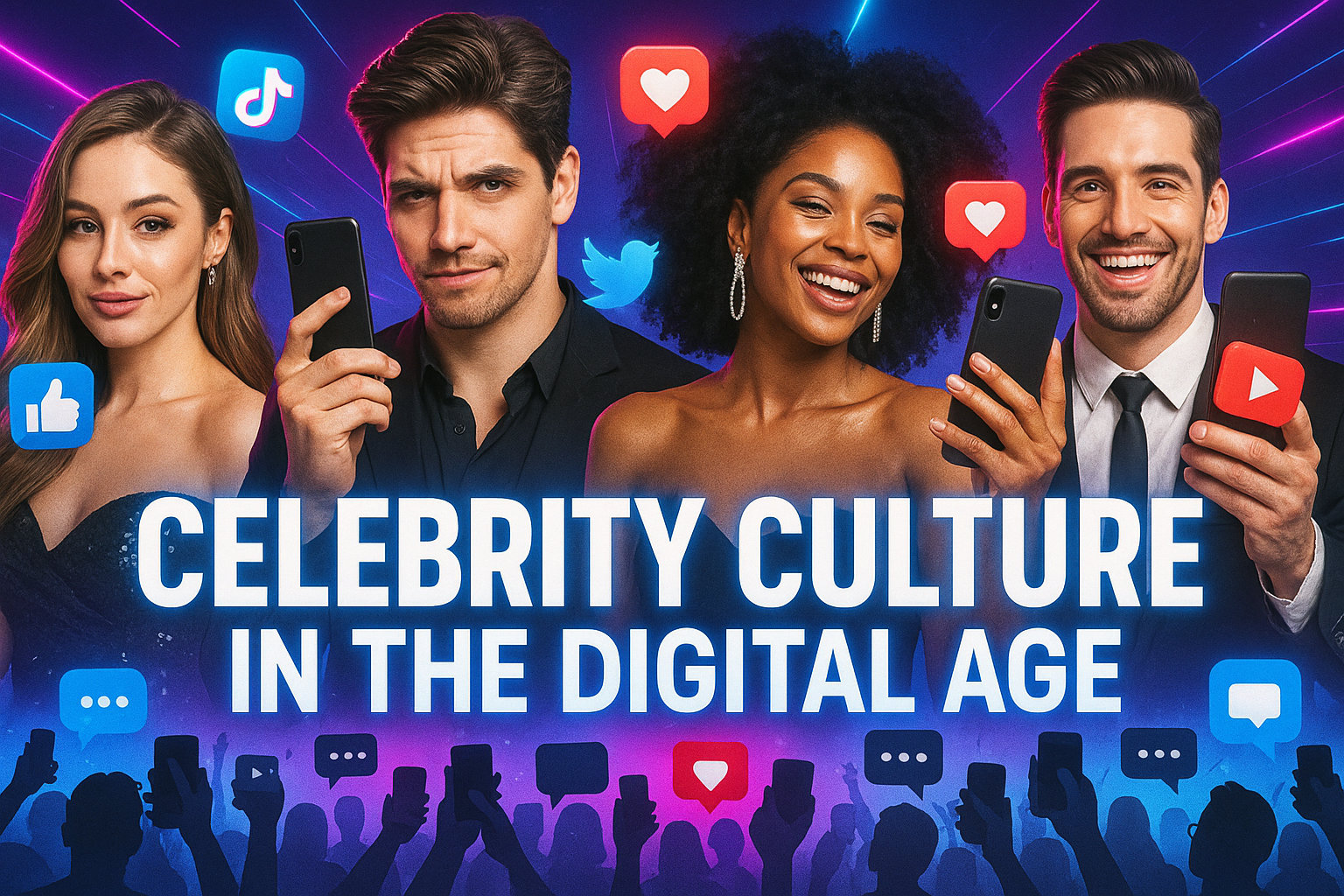
The digital age has completely transformed celebrity culture. Social media platforms, streaming services, and online communities have reshaped how fame is created, maintained, and consumed. Celebrities are now more accessible than ever, and the line between public and private life has blurred. Everyone with a smartphone can follow a star’s daily activities, interact with them online, or even rise to fame themselves.
This blog explores the evolution of celebrity culture in the digital era, how technology has changed fan engagement, the rise of digital influencers, and the implications for society, media, and entertainment industries.
The Shift from Traditional Media to Digital Platforms
In the past, traditional media—television, radio, newspapers, and magazines—controlled celebrity narratives. Fans relied on scheduled broadcasts and print media for updates on the lives of their favorite stars. Access was limited, filtered, and carefully curated.
The rise of the internet and social media platforms has democratized information. Celebrities now communicate directly with fans through Instagram, TikTok, Twitter, and YouTube. Audiences no longer need to wait for magazine features or TV interviews—they can watch live streams, read instant updates, and even participate in conversations with celebrities in real time.
This shift has given celebrities more control over their image while also increasing public scrutiny.
The Rise of Social Media Influencers
Digital platforms have created a new class of celebrities: social media influencers. Unlike traditional stars who gained fame through films, sports, or music, influencers often start with a smartphone and content creation skills.
Platforms like Instagram, TikTok, and YouTube allow anyone to build a following, share personal experiences, and monetize their content. Influencers have become key figures in marketing, lifestyle trends, and youth culture. Their relatability, authenticity, and accessibility give them power that traditional celebrities rarely had.
Brands collaborate with influencers to reach targeted audiences, making them central players in the modern celebrity economy.
Celebrity-Fan Engagement Has Become More Interactive
Technology allows fans to interact with celebrities directly. Live streams, Q&A sessions, comment sections, and social media challenges create a two-way communication channel. Fans can feel a personal connection with stars, ask questions, and even influence content creation.
This interaction builds loyalty, engagement, and emotional investment. Celebrities can gauge audience reactions instantly, adjust their messaging, and create content tailored to fan preferences. In the digital age, the relationship between fans and stars is more dynamic and participatory than ever before.
Instant Fame and Virality
The digital era has introduced the concept of “instant fame.” Viral videos, memes, and trending challenges can make someone famous overnight. Unlike traditional celebrity culture, which required years of work in the entertainment industry, social media allows fast-tracked recognition.
This instant fame can be short-lived, but it has changed the landscape of celebrity. Ordinary individuals can become digital stars in a matter of hours, creating a constantly evolving ecosystem of public attention and recognition.
Celebrity Branding and Entrepreneurship
Modern celebrities are no longer just performers—they are brands. Social media platforms allow stars to promote products, launch businesses, and monetize their fame directly. Personal branding has become a crucial part of celebrity culture.
From beauty products and clothing lines to digital courses and NFTs, celebrities leverage their audience for entrepreneurial ventures. This combination of fame and business is redefining what it means to be a public figure in the digital era.
The Role of Streaming Services
Streaming platforms like Netflix, Spotify, and YouTube have changed how celebrities reach audiences. Traditional gatekeepers, such as TV networks or record labels, no longer dictate who becomes famous. Independent creators can release films, music, or shows online and gain massive popularity.
The accessibility of content has globalized celebrity culture. A musician from one country can gain fans worldwide, and actors in niche genres can achieve international recognition. Streaming has amplified reach, diversity, and the democratization of fame.
The Blurring of Public and Private Life
Digital platforms have blurred the lines between public and private life for celebrities. Fans expect constant updates, behind-the-scenes glimpses, and personal insights. Many stars willingly share intimate moments to maintain relevance and connect with their audience.
However, this accessibility also increases scrutiny. Every action, opinion, or mistake is publicly visible and often amplified. Digital culture has created an environment where privacy is limited, and public perception can shift in minutes.
Mental Health Implications for Celebrities
The pressures of constant visibility have created new challenges. Social media fame exposes celebrities to trolling, criticism, and online harassment. The demand to maintain an online presence and stay relevant can be overwhelming.
In response, some celebrities openly discuss mental health, advocating for balance and self-care. Platforms are also introducing tools to manage abuse, harassment, and content moderation. The digital age requires both resilience and strategy for public figures navigating fame.
Fan Culture and Digital Communities
Online communities have strengthened fan culture. Fans organize campaigns, trends, and virtual events to support their favorite celebrities. Hashtags, fan pages, and discussion forums create global communities centered around admiration and loyalty.
Technology has also empowered fans to influence celebrity decisions, such as which projects get attention or which products succeed. This participatory culture has made fame more interactive and collaborative than ever before.
Challenges and Risks in the Digital Age
While digital platforms offer opportunities, they also introduce risks. Misinformation, fake accounts, deepfakes, and privacy breaches can impact a celebrity’s reputation. The speed of information spread means rumors can go viral before being verified.
Additionally, monetization pressures can encourage overexposure, burnout, or content prioritization over authenticity. Celebrities must navigate these challenges carefully to maintain credibility and long-term relevance.
The Globalization of Celebrity Culture
Digital platforms have created a global audience for celebrities. Actors, musicians, influencers, and sports stars now have fans worldwide. Language barriers are reduced through translation tools, subtitles, and global platforms.
This globalization increases cultural exchange, but it also intensifies competition. Celebrities must appeal to diverse audiences while maintaining authenticity. Technology has made fame borderless, connecting creators and fans across continents.
The Future of Celebrity Culture
The future of celebrity culture will continue to evolve with technology. Virtual celebrities, AI-generated influencers, holographic concerts, and interactive fan experiences are emerging trends. Artificial intelligence may create fully digital stars that interact with audiences just like human celebrities.
Augmented reality and immersive media will make fans feel closer to their favorite stars than ever before. At the same time, the importance of authenticity, engagement, and personal connection will remain crucial in maintaining influence and loyalty.
Conclusion
Celebrity culture has undergone a profound transformation in the digital age. Technology has democratized fame, increased accessibility, and created new opportunities for engagement, entrepreneurship, and global recognition. Social media, streaming platforms, and digital tools have empowered both traditional stars and new influencers to build powerful personal brands.
However, this new era also presents challenges, including privacy concerns, mental health pressures, and the risks of instant fame. The evolution of celebrity culture is ongoing, shaped by technology, audience behavior, and the constant desire for connection and entertainment.
The digital age has redefined what it means to be a celebrity. Fame is no longer a distant aspiration—it is interactive, immediate, and constantly evolving. Understanding this transformation helps us appreciate how culture, media, and society continue to adapt to technological progress.
