
Introduction
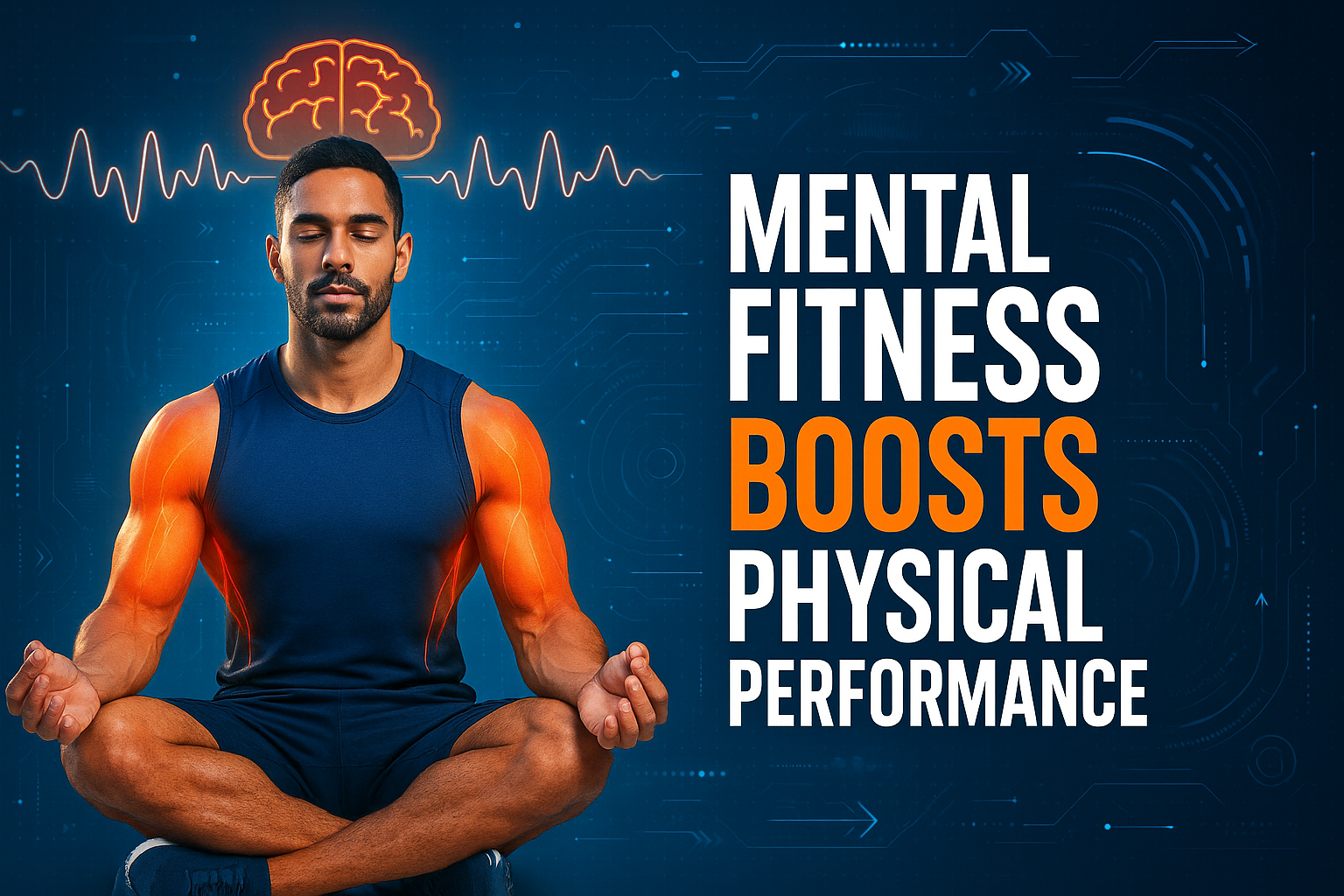
In 2025, the connection between the mind and body is better understood than ever before. Mental fitness is no longer just about emotional well-being or stress management; it plays a crucial role in enhancing physical performance. Athletes, fitness enthusiasts, and even everyday exercisers increasingly recognize that mental strength, focus, and resilience are as important as physical conditioning. The mind and body are deeply interconnected, and optimizing mental fitness can unlock new levels of performance, consistency, and endurance.
Mental fitness encompasses concentration, emotional regulation, motivation, stress management, and visualization skills. In sports, exercise, and even everyday physical activities, a strong mental state allows individuals to push boundaries, recover faster, and perform more efficiently. This blog explores how mental fitness improves physical performance, highlighting techniques, benefits, and strategies relevant to 2025.
The Mind-Body Connection
Scientific research continues to confirm the intricate relationship between the brain and the body. Neural pathways control movement, coordination, and energy distribution, while psychological states influence motivation, endurance, and recovery. Mental fatigue can reduce reaction times, decrease strength, and impair focus during physical activities.
Conversely, a sharp, resilient mind enhances motor skills, reaction speed, and overall efficiency. Mental fitness ensures that athletes and individuals remain focused under pressure, respond effectively to challenges, and maintain proper technique even when fatigued. By training the mind alongside the body, individuals achieve superior performance outcomes.
Focus and Concentration Boost Performance
One of the most immediate ways mental fitness impacts physical performance is through improved focus. Mental training techniques like mindfulness, meditation, and visualization allow athletes to concentrate fully on the task at hand. By reducing distractions and internal chatter, individuals execute movements with greater precision and consistency.
For example, a sprinter who maintains mental clarity during a race reacts faster to the starting signal, maintains optimal form, and manages energy distribution more efficiently. Mental focus translates directly into physical performance, enhancing outcomes in training and competition alike.
Stress Management Enhances Recovery
Stress is a major factor that affects physical performance. High stress levels increase cortisol, impair sleep, reduce recovery, and hinder energy levels. Mental fitness practices, including deep breathing, meditation, and cognitive behavioral techniques, help regulate stress and maintain balance.
Athletes who manage stress effectively recover faster, avoid injuries, and maintain consistent performance. Mental fitness allows individuals to approach training and competition calmly, preserving energy and improving endurance.
Visualization and Mental Rehearsal
Visualization is a powerful mental fitness tool that enhances physical performance. Athletes and fitness enthusiasts visualize movements, routines, and strategies in their mind before executing them physically. This practice strengthens neural pathways, improves muscle memory, and enhances coordination.
For example, a gymnast mentally rehearsing a complex routine is more likely to perform flawlessly in real-time. Visualization enhances confidence, reduces anxiety, and allows the brain to prepare for challenges, translating mental preparation into superior physical execution.
Building Resilience and Motivation
Mental fitness fosters resilience, enabling individuals to overcome setbacks, fatigue, and plateaus. Motivated individuals persist longer, push harder, and recover more effectively from challenging workouts or competitions. In 2025, mental training apps and AI-driven coaching programs assist athletes in setting goals, tracking progress, and maintaining high levels of motivation.
Resilience and motivation also improve consistency, a critical factor in long-term fitness. Those who cultivate mental strength maintain training routines even when progress feels slow, leading to measurable improvements in physical performance over time.
Emotional Regulation for Optimal Performance
Emotions like frustration, anxiety, or overexcitement can negatively affect physical performance. Mental fitness techniques teach emotional regulation, allowing individuals to stay calm, focused, and composed during intense physical activity. By controlling emotional responses, athletes maintain precision, timing, and endurance under pressure.
Sports psychology programs in 2025 emphasize emotional intelligence, teaching techniques to manage mood swings, handle competition stress, and remain mentally balanced. This emotional stability supports optimal physical performance and reduces performance-related errors.
Improved Sleep and Recovery Through Mental Training
Sleep is essential for physical recovery, muscle growth, and energy replenishment. Mental fitness practices, including mindfulness, meditation, and cognitive relaxation techniques, improve sleep quality. In 2025, wearable devices monitor sleep patterns and provide AI-driven recommendations for mental and physical recovery.
Better sleep allows the body to repair tissues, restore energy, and optimize hormone levels, directly enhancing physical performance. Athletes and individuals with strong mental fitness routines enjoy faster recovery and improved endurance during training and competitions.
Mindfulness Enhances Body Awareness
Mindfulness, a key component of mental fitness, improves body awareness. Athletes trained in mindfulness can sense muscle tension, detect fatigue, and adjust movements in real time. This heightened awareness prevents injuries, improves form, and enhances overall efficiency.
Mindful practices also increase focus on breathing, posture, and movement alignment, ensuring that exercises are performed effectively. In 2025, wearable technology and AI-driven feedback further enhance mindfulness training, helping individuals synchronize mental focus with physical actions.
Cognitive Training for Reaction and Coordination
Mental fitness extends to cognitive training that enhances reaction time, decision-making, and coordination. Brain-training exercises, neurofeedback, and AI-assisted simulations improve cognitive flexibility and processing speed. In sports, this means faster reactions to opponents, better strategic decisions, and precise execution under pressure.
For fitness enthusiasts, cognitive training enhances multitasking during complex exercises, reduces errors, and improves overall efficiency. Mental and physical training together create a well-rounded, high-performing individual.
Holistic Approach to Fitness
Modern fitness in 2025 integrates mental and physical components for holistic development. Physical training alone is insufficient for peak performance. Incorporating mental fitness practices such as mindfulness, visualization, stress management, and cognitive training ensures balanced improvement.
Holistic fitness supports long-term health, resilience, and performance. Individuals who focus on both mind and body achieve superior results, enjoy greater motivation, and maintain consistency over extended periods.
Conclusion
Mental fitness is a critical driver of physical performance in 2025. By enhancing focus, managing stress, building resilience, regulating emotions, improving sleep, and increasing body awareness, individuals can achieve peak performance in sports and daily physical activities. Visualization, cognitive training, and mindfulness amplify these benefits, creating a strong connection between mind and body.
The future of fitness is not just about stronger muscles or faster sprints; it is about a trained mind guiding a capable body. Those who prioritize mental fitness alongside physical training gain a competitive edge, achieve consistent results, and maintain long-term health and performance. Mental fitness is no longer optional — it is essential for anyone serious about maximizing their physical potential.
