
Introduction
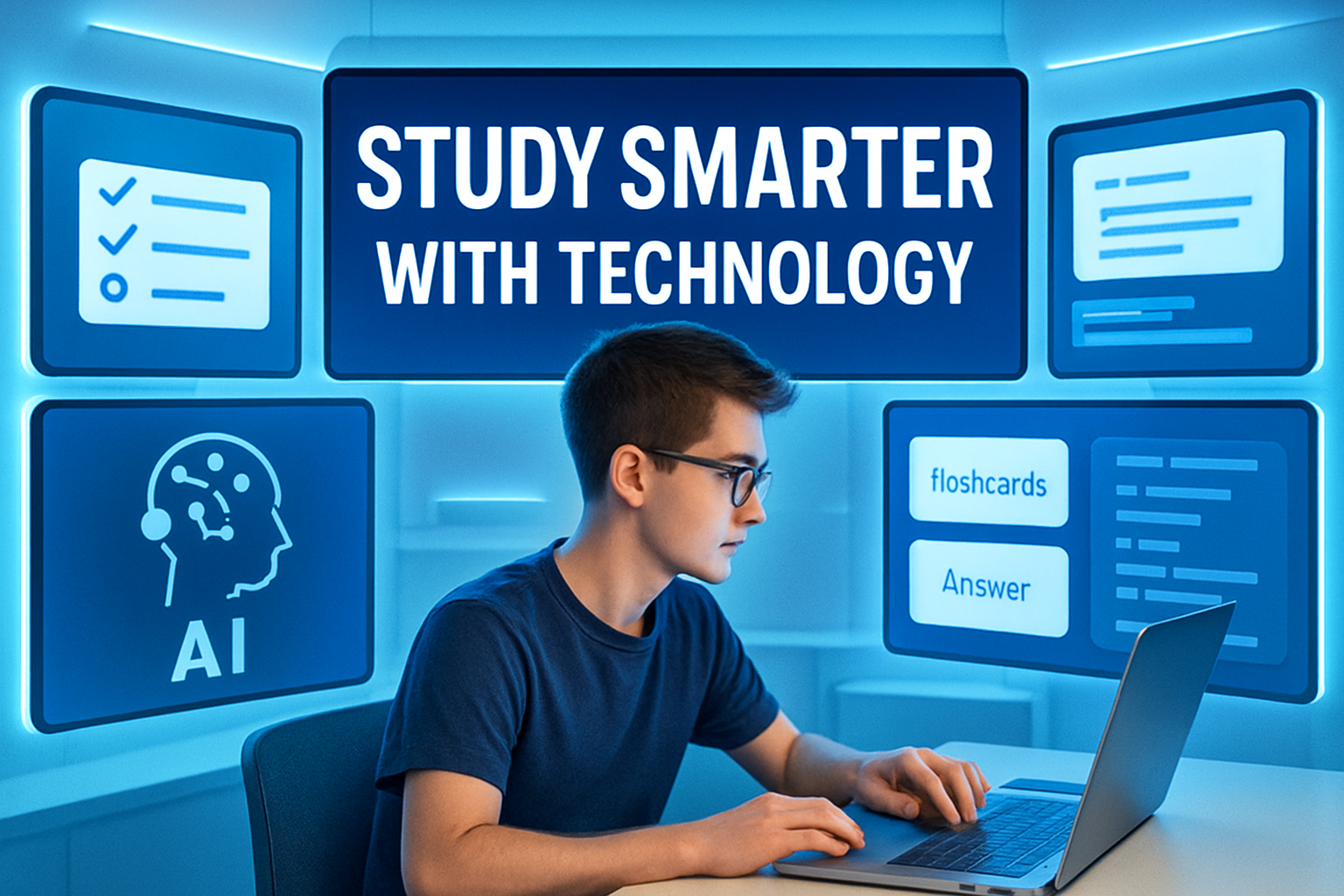
In today’s fast-moving digital world, students no longer need to rely only on textbooks, handwritten notes, and long study hours to achieve academic success. Technology has completely transformed the way students learn, understand, revise, and organize information. Instead of studying harder, students can now study smarter by using modern digital tools, smart devices, and AI-powered platforms that make learning faster, easier, and far more effective.
The year 2025 brings countless tech resources designed specifically to improve academic performance. These tools help students manage time better, stay more focused, understand concepts more clearly, and retain information longer. From AI tutors to smart note-taking apps, digital flashcards, online courses, and productivity tools, technology empowers students to learn at their best pace and style.
This blog explores exactly how students can use technology to study smarter—not harder—and boost their academic success in a highly competitive world.
Smart Note-Taking for Better Understanding
One of the biggest challenges for students is managing their notes. Traditional note-taking often leads to messy, incomplete, or hard-to-read pages, making revision stressful. Technology solves this problem with smart note-taking apps that automatically organize information, convert handwriting into digital text, and store everything neatly in the cloud.
Apps like Notion, OneNote, and Evernote help students create structured notes with headings, highlights, to-do lists, and embedded links. This makes understanding and revising topics more convenient. Some tools even offer AI-generated summaries so students can quickly review the main ideas without going through lengthy pages.
Digital note-taking allows students to access their notes anytime and on any device, ensuring nothing is ever lost and everything is easy to find.
AI Tutors for Personalized Learning
AI tutors are one of the most powerful educational tools in 2025. They adapt to each student’s learning style, speed, and understanding level. Unlike traditional teaching methods, AI tutors provide personalized lessons, instant feedback, and step-by-step explanations.
Whether a student struggles with math, science, languages, or writing, AI tutors provide quick solutions and clear guidance. These tools can detect areas where the student needs more practice and automatically create customized exercises. This not only saves time but also boosts confidence and improves academic performance.
AI tutors make learning more interactive, allowing students to ask questions at any moment and receive instant answers.
Digital Flashcards for Faster Revision
Flashcards are one of the most effective memory-boosting tools, and technology has made them even better. Apps like Anki and Quizlet allow students to create digital flashcards with text, images, audio, and examples.
Digital flashcards use spaced repetition—a scientifically proven method that helps improve long-term memory. The app shows cards at the perfect time when the brain is about to forget them, making learning more efficient and reducing study time.
Students can use digital flashcards for vocabulary, formulas, diagrams, historical facts, and much more. They can even share decks with classmates or access publicly created decks to save time.
Online Courses for Deep Skill Development
With technology, students are no longer limited to classroom learning or school textbooks. Online platforms offer a wide range of courses on subjects like coding, AI, business, design, and communication skills. These courses help students gain deeper knowledge and develop practical skills that traditional classrooms often don’t cover.
In 2025, many universities and companies recognize online course certificates, making them a great addition to a student’s resume. Whether a student wants to improve academic knowledge or learn skills for future jobs, online courses provide flexible and high-quality education from anywhere.
Online learning also includes quizzes, assignments, and discussion forums that help students stay engaged and understand concepts more clearly.
Productivity Apps for Better Time Management
Time management is one of the biggest challenges students face. With multiple assignments, exams, and personal activities, staying organized can be overwhelming. Productivity apps help students plan their day, set reminders, and track progress.
Apps like Trello, Notion, Google Calendar, and Todoist allow students to create schedules, break tasks into smaller steps, and prioritize their workload. Some apps even include AI-powered suggestions to help students manage their time more effectively based on their habits.
By using digital planners, students can reduce procrastination, stay consistent, and complete their tasks without stress.
Distraction Blockers to Improve Focus
Smartphones, social media, and notifications are major sources of distractions for students. To study smarter, students need tools that help them stay focused. Apps like Forest, Focus To-Do, and Freedom block distracting websites, mute notifications, and track how much productive time students spend.
These tools create an ideal study environment by limiting digital interruptions. The Pomodoro Technique, used in many focus apps, breaks study sessions into 25-minute intervals, followed by short breaks. This method keeps the brain fresh, reduces burnout, and improves productivity.
By using distraction blockers, students can make the most of every study session.
Smart Devices That Enhance Learning
Smart devices in 2025 are more advanced than ever, helping students learn more efficiently. Tablets, e-readers, and stylus-compatible devices offer an optimized reading and writing experience. Smart keyboards, ergonomic accessories, and blue-light-filter screens support longer study hours without causing fatigue.
Smart speakers like Alexa or Google Assistant help students set reminders, play study playlists, answer quick questions, and manage daily tasks. Digital whiteboards and stylus pens make diagrams and problem-solving easier.
These devices reduce physical effort and enhance overall learning quality.
Cloud Storage for Easy Access and Safety
Losing notes, assignments, or projects can be extremely stressful. Cloud storage prevents this by automatically saving everything online. Services like Google Drive, Dropbox, and iCloud allow students to store documents, presentations, and study materials securely.
Cloud storage also enables students to access their files across multiple devices. Whether at home, school, or a café, students can continue studying without interruption. Additionally, collaborative features make group projects easier by allowing multiple students to work on the same document in real time.
Collaboration Tools for Group Projects
Group assignments are a major part of student life, and technology makes collaboration effortless. Tools like Google Docs, Microsoft Teams, and Zoom enable students to communicate, share files, and work on the same document simultaneously.
Instead of long meetings or messy file exchanges, collaboration tools keep everything organized. Students can brainstorm ideas, divide tasks, track progress, and present work more efficiently.
Technology ensures that group projects become smoother, faster, and more productive.
Digital Libraries for Unlimited Learning
Digital libraries offer millions of books, journals, articles, and academic resources that students can access anytime. These online libraries help students find accurate information, conduct research, and gain deeper understanding of subjects.
In 2025, students can access e-books, audiobooks, research papers, and educational videos through platforms like Google Books, JSTOR, and university libraries. Digital libraries eliminate the need for physical copies and make information instantly available.
This saves time, expands learning opportunities, and encourages independent study.
Why Studying Smarter Matters More Than Studying Harder
Studying harder does not guarantee better results. What matters is how effectively students use their time and resources. Technology allows students to:
- Understand concepts faster
- Remember information longer
- Stay organized
- Avoid distractions
- Learn at their own pace
- Reduce stress
- Improve their grades
By studying smarter, students improve both academic performance and overall well-being.
Technology is not just a tool — it is a learning companion that transforms how students grow and succeed.
Conclusion
Technology has reshaped modern education and given students powerful tools to study smarter, not harder. From AI tutors and smart note-taking apps to digital flashcards, productivity tools, and smart devices, students can now learn faster, stay more organized, and achieve better results with less effort.
In 2025, the students who understand how to use technology effectively will have a clear advantage. They can access global knowledge, develop new skills, and stay academically competitive. As technology continues to evolve, students will have even more opportunities to improve their learning experience and shape a successful future.
Studying smarter is the new approach to education — and technology is the bridge that makes it possible.
