
Introduction
Education is changing faster than ever, and in 2025, one trend stands out as a major force reshaping how people learn: micro-learning. The traditional idea of spending years in classrooms or completing long, intensive programs is no longer the only path to gaining skills. Today’s world demands quick, flexible, and practical learning solutions that fit the pace of modern life. Micro-learning and short courses have emerged as powerful alternatives that offer efficient, targeted, and time-friendly ways to gain knowledge.
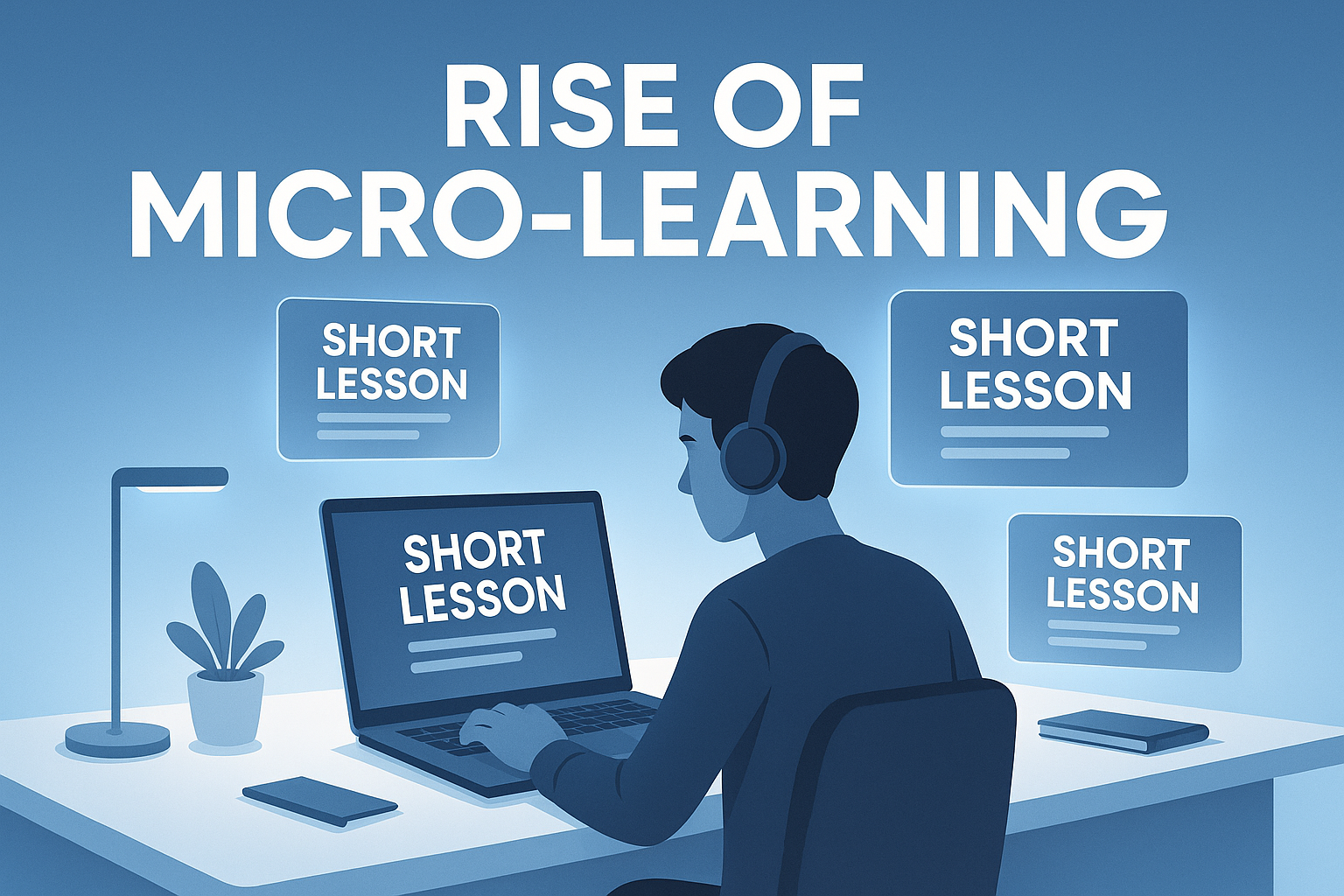
Micro-learning involves breaking complex subjects into small, easy-to-understand lessons that can be completed in minutes rather than hours. These bite-sized modules are designed to help learners absorb information quickly without feeling overwhelmed. Combined with short courses, which often focus on specific skills or topics, this new form of education has become a global movement.
The rise of micro-learning is driven by rapid technological growth, evolving job markets, and the increasing need for continuous learning. Whether students, professionals, or hobby learners, people everywhere are turning to these faster, more flexible formats to stay updated, improve their skills, and remain competitive in a world that never stops changing.
Changing Learning Preferences in the Digital Age
Today’s learners prefer fast, accessible, and interactive content. With shorter attention spans and busy schedules, long lectures and heavy textbooks often feel outdated. Micro-learning fits perfectly with modern lifestyles because it respects the learner’s time and attention.
People now consume information quickly through platforms like YouTube, TikTok, and social media. They are used to short videos, quick tips, and visually rich explanations. Micro-learning uses the same format for education, making learning more relatable and enjoyable. This shift in preference is one of the biggest reasons micro-learning is becoming the new norm.
How Technology Has Accelerated Micro-Learning
Micro-learning would not be possible without advancements in technology. Smartphones, high-speed internet, and interactive apps have made it easy for learners to access educational content anytime, anywhere. AI-powered platforms now personalize lessons, track progress, and recommend modules that match a learner’s pace and style.
Platforms like Coursera, Udemy, LinkedIn Learning, and Skillshare offer short courses that teach everything from coding to photography. AI tutors provide instant feedback, quizzes, and adaptive learning paths that make education smoother and more efficient. Because of these tech-driven systems, micro-learning has become widely accessible, even in rural or remote areas.
Short Courses for Skill-Based Learning
Short courses are becoming the go-to solution for people who want to acquire new skills quickly. Instead of spending months or years studying a general curriculum, learners can focus on a specific skill and master it in days or weeks. These courses are often aligned with industry demands, making them incredibly valuable for career growth.
In 2025, many professionals take micro-courses to upgrade their skills in digital marketing, coding, project management, AI tools, graphic design, and entrepreneurship. Employers also encourage this approach because short courses allow teams to stay updated without requiring long breaks or expensive training programs.
With industries evolving rapidly, short courses are helping people stay relevant and competitive.
Micro-Learning Improves Retention and Understanding
Several studies show that micro-learning increases memory retention. When learners study small chunks of information, the brain processes it more efficiently and stores it longer. Large lessons often lead to mental fatigue, but bite-sized modules keep the brain fresh and focused.
Micro-learning also promotes consistent learning habits. Completing a 5-minute lesson feels easy and achievable, motivating learners to continue. This consistency leads to better long-term results, especially when learning new languages, software, or technical skills.
Professional Growth Through Micro-Credentials
Micro-learning has given rise to micro-credentials, which are small certifications earned after completing short courses. These certificates highlight specific skills and are increasingly recognized by employers.
In 2025, companies prefer candidates who continuously update their skills rather than relying solely on old degrees. Micro-credentials show that a person is adaptable, proactive, and ready to grow. Fields like technology, healthcare, finance, and creative industries now value micro-credentials as proof of practical, job-ready skills.
This shift is redefining how qualifications are measured in the modern workplace.
Flexibility That Traditional Education Cannot Match
Traditional education often requires long-term commitment, fixed schedules, and in-person attendance. Micro-learning is the complete opposite—flexible, self-paced, and accessible anywhere. Learners can study during a lunch break, while commuting, or even before sleeping.
This freedom makes micro-learning ideal for:
- Students with busy academic schedules
- Working professionals
- Stay-at-home parents
- Entrepreneurs
- Lifelong learners
By giving people control over their learning journey, micro-learning ensures that education is not a burden but a convenient opportunity.
The Role of AI in Personalized Micro-Learning
AI is one of the biggest driving forces behind the rise of micro-learning. AI systems analyze learner performance, identify strengths and weaknesses, and personalize courses accordingly. They break down complex topics into smaller lessons and adjust the difficulty level in real time.
AI tutors explain concepts, answer questions, and provide practice exercises instantly. They help learners stay engaged and motivated by tracking progress and celebrating milestones. This personalized support makes micro-learning more effective than traditional one-size-fits-all teaching methods.
Micro-Learning for Corporate Training
More companies are adopting micro-learning for employee training because it saves time, reduces costs, and improves results. Instead of organizing long workshops, companies now offer short, skill-focused lessons delivered through apps or internal platforms.
Employees can learn new software, leadership skills, safety procedures, or company policies in small, manageable modules. This ensures that training does not disrupt daily workflow. As a result, productivity improves, and employees feel more confident and skilled.
Micro-Learning in Schools and Universities
Even educational institutions are adopting micro-learning. Teachers break lessons into small parts, use digital platforms to deliver content, and incorporate interactive activities that match students’ attention levels.
Universities offer micro-courses that complement traditional degrees, helping students build practical skills alongside academic knowledge. Micro-learning also supports struggling students by simplifying complex topics and providing extra guidance without adding academic pressure.
The Global Demand for Quick, Practical Learning
In a fast-changing world, people need skills quickly. New jobs appear, technologies evolve, and industries shift rapidly. Micro-learning solves this challenge by offering rapid, targeted learning solutions.
People prefer learning formats that teach practical skills they can apply immediately. Whether it’s learning how to use a new AI tool, improving communication skills, or understanding digital trends, micro-learning delivers instant value.
This global demand is one of the main reasons micro-learning will continue growing in popularity for years to come.
Conclusion
The rise of micro-learning and short courses is transforming education forever. This new learning model aligns perfectly with modern lifestyles, technological advancements, and evolving job requirements. It offers personalized learning, flexibility, faster skill acquisition, and improved engagement. Whether someone wants to upgrade their career, explore a hobby, or stay updated with new trends, micro-learning provides the perfect solution.
As AI becomes more advanced and digital platforms expand, micro-learning will become an even more powerful force in shaping the future of education. The days of relying solely on long degrees are fading. The future belongs to fast, flexible, and skill-focused learning—and micro-learning is leading the way.
